For most business owners, having a website built in 2026 costs somewhere between € 1,000 and € 10,000. A simple site based on a theme sits at the lower end; a website with a custom design, strong copy and integrations sits at the higher end. Online stores and portals regularly go beyond that. More important than the amount is the question of what your website should achieve: the investment should match that goal.
In short
- The price mainly depends on size, custom design, features, copy and technology.
- Besides the build, budget for recurring costs: hosting, maintenance and security.
- The cheapest website is rarely the best value: a slow or hard-to-find site costs you customers.
- Decide on your goal first (more enquiries, sales or fewer phone calls), then choose the budget.
Why is there no fixed price for a website?
A website is not an off-the-shelf product. A freelancer in Hapert with five pages needs something completely different from a wholesaler in Eersel with hundreds of products, stock integrations and two languages. On top of that, the approach differs per agency: do you work with a standard theme in your own colours, or have a design made that fits your brand and your customers exactly?
Compare it with a renovation. A new kitchen can cost € 5,000 or € 40,000. Both are kitchens, but what you get is completely different. Websites work the same way.
Which factors determine the price of a website?
1. Size and types of pages
The more pages and page types, the more design, build and testing work. A homepage, service pages, an about page and a contact page form the basis. Every extra page type, such as a project overview, a vacancies page or local pages per town, adds to the total.
2. Custom design or a standard theme
A standard theme is cheaper, but your site quickly looks like your competitor’s and often contains a lot of unnecessary code. A custom design takes more time, but you get a unique look and a faster, cleaner website that guides visitors straight to the right button.
3. Features
- An online store with payment and shipping options
- Online appointments or reservations
- Integrations with your accounting, CRM or stock management
- A client portal or members-only area
- Multiple languages
Anything beyond showing information requires extra development and, above all, extra testing.
4. Copy, photos and findability
Do you supply text and images yourself, or have them written and made? Good, search-friendly copy makes the difference between a nice website and a website that gets found in Google and in AI search engines such as ChatGPT. Real photos of you, your team and your work also build more trust than stock photos.
5. Speed and technology
A website that scores green on the Core Web Vitals requires careful work: optimised images, clean code and smart caching. That investment pays for itself in better rankings and more enquiries.
6. Hosting, maintenance and further development
After launch, your website needs fast hosting, updates, backups and security. So don’t only count the one-off build costs, but also the monthly costs.
What prices do you see in the market?
As an indication, based on common rates in the Netherlands:
| Type of website | Indication | Suits |
|---|---|---|
| DIY website builder | A few dozen euros per month | Getting started with a simple online business card |
| Business website based on a theme | About € 1,000 – € 3,000 | Small businesses with a limited budget |
| Business website with custom design | About € 3,000 – € 10,000 | Businesses that want to grow through their website |
| Online store | Often from € 4,000 | Selling online, with or without integrations |
| Hosting and maintenance | A few dozen to a few hundred euros per month | Every professional website |
These are general ranges, not fixed prices. What your website costs depends on your wishes and goals. On our website development page you can read how we approach it.
Which costs come after launch?
Many business owners only look at the build price. List the recurring costs in advance too, so you don’t get any surprises:
- One-off: design, build, copy, photography, setup and launch.
- Yearly: domain name and any plugin licences.
- Monthly: hosting, updates, backups, security and small changes.
- Optional: online marketing, such as SEO, Google Ads or new content.
Tip: always ask for the total cost over three years. That way you compare quotes fairly and immediately see which agency leaves you on your own after launch.
Cheap or good: what should you look for?
A low price is attractive, but look at what you get in return. A few questions you can ask any agency:
- Who is my contact after launch, and how quickly do you respond?
- Can I change text and photos myself without breaking anything?
- How fast is a website you built before? Show me.
- Is the site mine, including the domain name and login details?
- Do you think along about findability, or do you only build?
Common mistakes when choosing a website
- Choosing on price alone. A website that delivers nothing is always too expensive.
- Not setting a goal. Without a goal you don’t know which pages and features you need.
- Writing copy at the last minute. Good copy is the engine of your findability.
- Forgetting maintenance. A website without updates becomes slow and vulnerable.
- No local focus. Working in the Kempen region? Make sure your website shows it.
How to get the most out of your budget
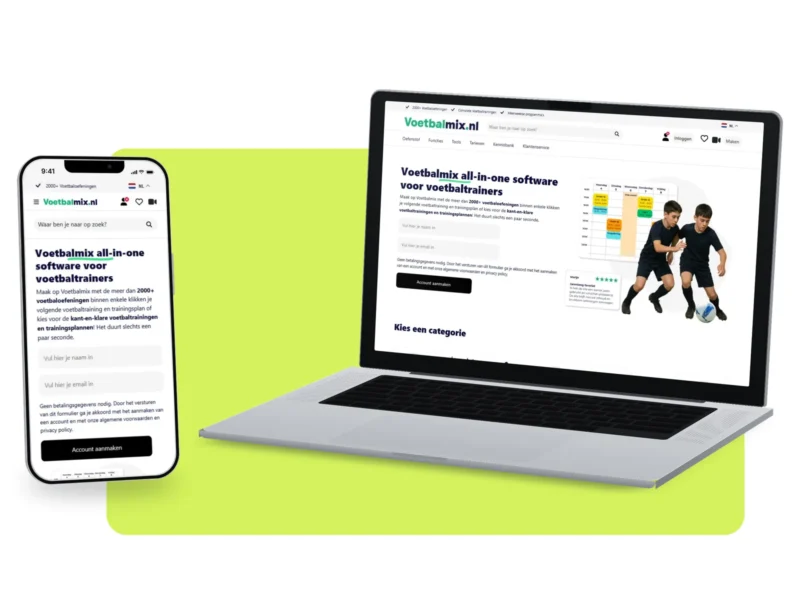
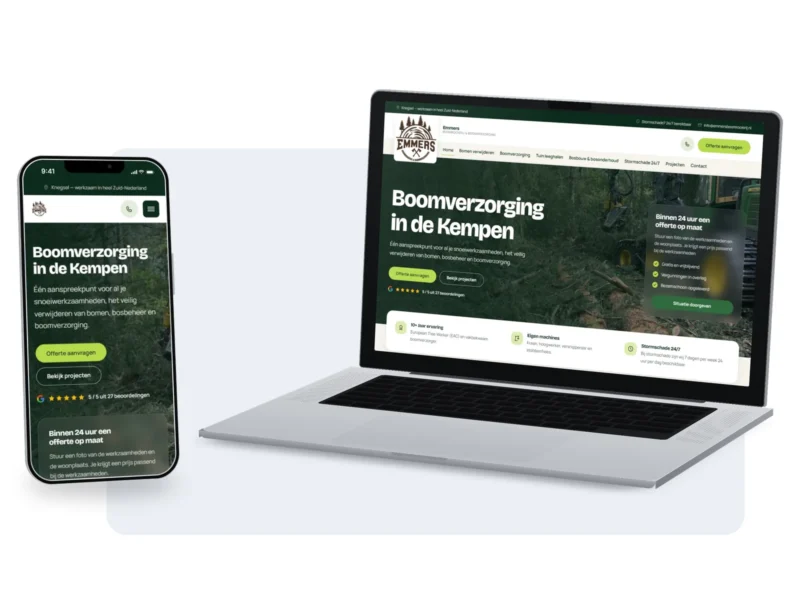
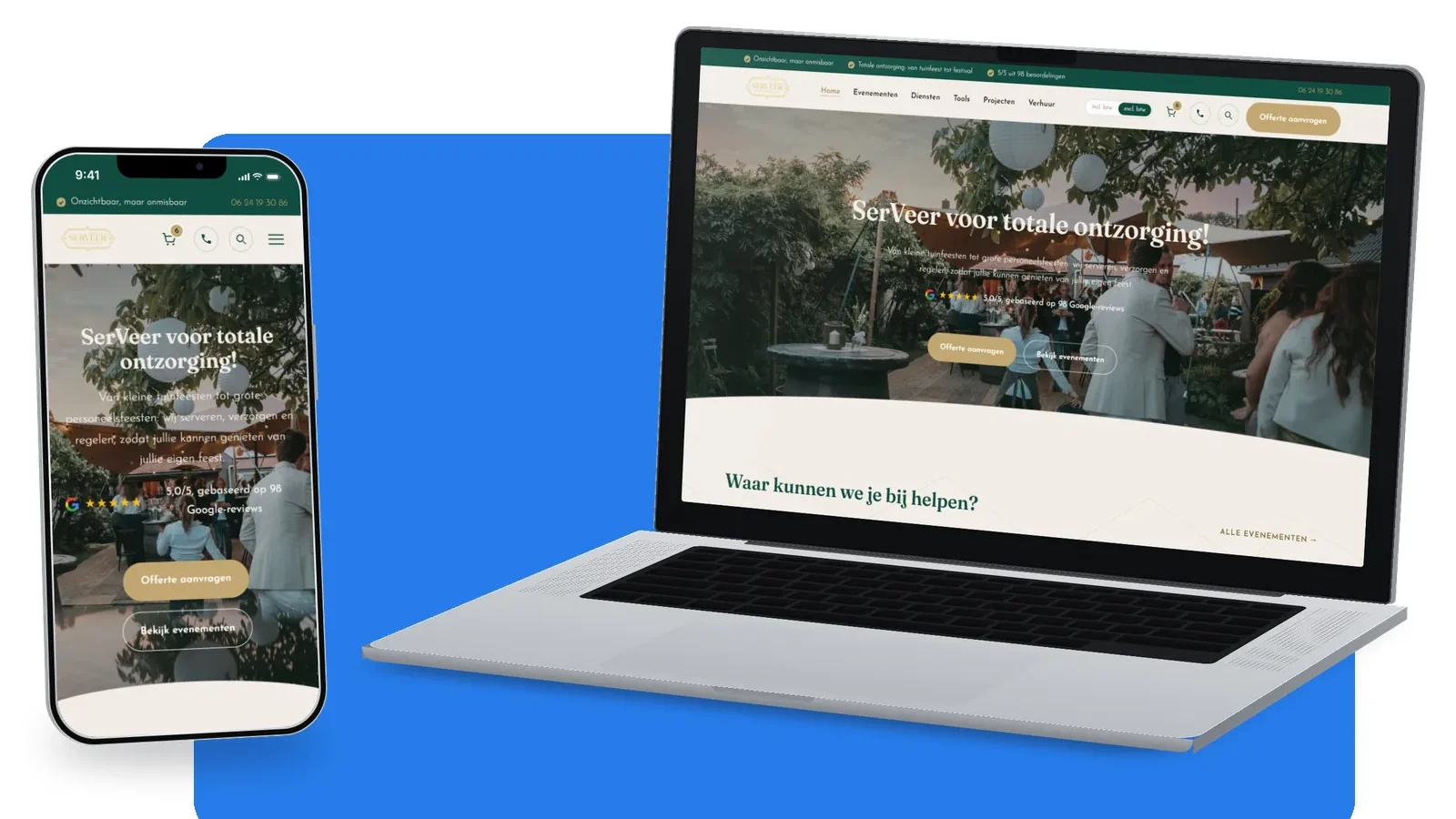
Start with what you really need to help customers and expand step by step. A strong homepage, clear service pages and an easy contact form usually deliver more than ten extra features. Invest in speed and good copy, because they decide whether you get found. And choose a partner who stays available, so your website can grow with your business. Our projects show what that looks like in practice.