Core Web Vitals are three Google metrics that show how pleasant your website feels: how quickly the main content appears (LCP), how quickly the page responds when you click or tap (INP) and how stable the page stays while loading (CLS). If your website scores green on these, visitors stay longer, get in touch sooner and you have an edge in Google.
In short
- LCP (loading): good is within 2.5 seconds.
- INP (responsiveness): good is within 200 milliseconds.
- CLS (stability): good is a score below 0.1.
- Google looks at real visitors, mainly on mobile. That is where most gains are.
What are the three Core Web Vitals?
LCP: Largest Contentful Paint
LCP measures how long it takes before the largest element is visible, usually the big photo or heading at the top. For your visitor it feels like: is the page there yet? Good is within 2.5 seconds; poor is more than 4 seconds.
INP: Interaction to Next Paint
INP measures how quickly your website responds to a click, tap or key press. Does the menu open straight away, or is there an annoying delay? Good is within 200 milliseconds. Since 2024, INP has replaced the older FID metric.
CLS: Cumulative Layout Shift
CLS measures how much the page jumps around while loading. You know the feeling: you want to tap a button and at that very moment a banner slides into view. Good is a score below 0.1.
Why does a fast website bring in more customers?
Visitors are impatient, especially on their phone. Someone in Bladel looking for a hairdresser or installer will click back to Google within seconds if a website is slow, and pick the next one. A fast website keeps that visitor. Google also uses the Core Web Vitals as one of the signals for ranking. When two pages are equally good, the faster one wins.
Speed is not a technical detail but customer friendliness. Every second of waiting is a moment your visitor can drop off.
How do you measure your website’s Core Web Vitals?
- PageSpeed Insights: enter your address at pagespeed.web.dev to see real-visitor scores and a lab test with suggestions.
- Google Search Console: the Core Web Vitals report shows per group of pages what is going well and what can be improved.
- Chrome DevTools: useful for developers to pinpoint a problem.
Mind the difference between lab data (a test at one moment) and field data (what real visitors experienced over the past 28 days). Google uses the field data.
How do you improve your scores?
Improving LCP
- Serve images in a modern format such as WebP or AVIF, at the right size.
- Load the large image at the top immediately (no lazy loading) and give it priority.
- Choose fast hosting and use caching, so the server responds quickly.
- Host fonts yourself and only load the styles you actually use.
Improving INP
- Use as little JavaScript as possible and only load scripts when they are needed.
- Be critical of third-party chat widgets, trackers and heavy sliders.
- Choose a lightweight theme instead of a page builder with every bell and whistle.
Improving CLS
- Always give images and videos a fixed width and height.
- Reserve space for banners, cookie notices and ads.
- Prevent fonts from making text jump while loading.
Common culprits on WordPress websites
- A heavy multipurpose theme or page builder that loads everything on every page.
- Too many plugins, each adding its own CSS and JavaScript.
- Large photos uploaded straight from a camera or phone.
- Cheap shared hosting without caching.
- External scripts such as chat, pixels and widgets all loading at once.
The good news: almost every problem can be solved. Sometimes with a few smart tweaks, sometimes with a new, clean foundation.
How does Klerks Webdevelopment approach this?
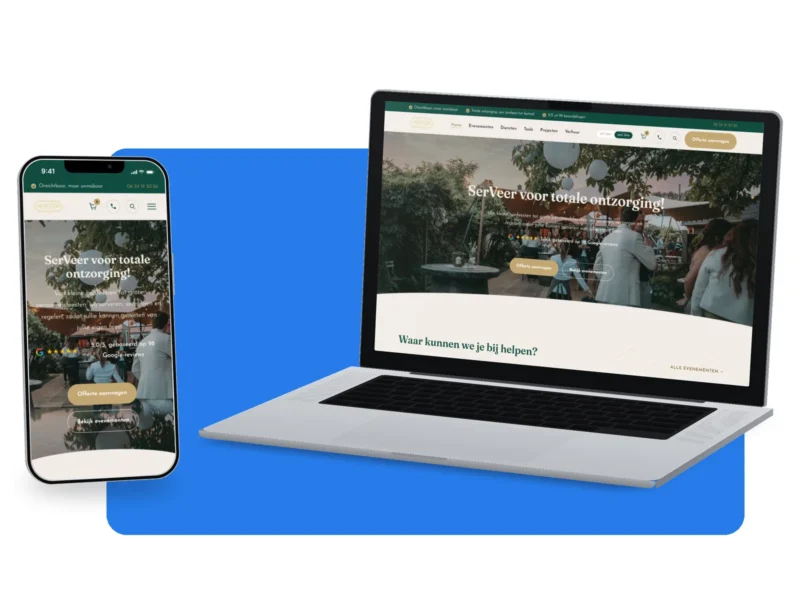
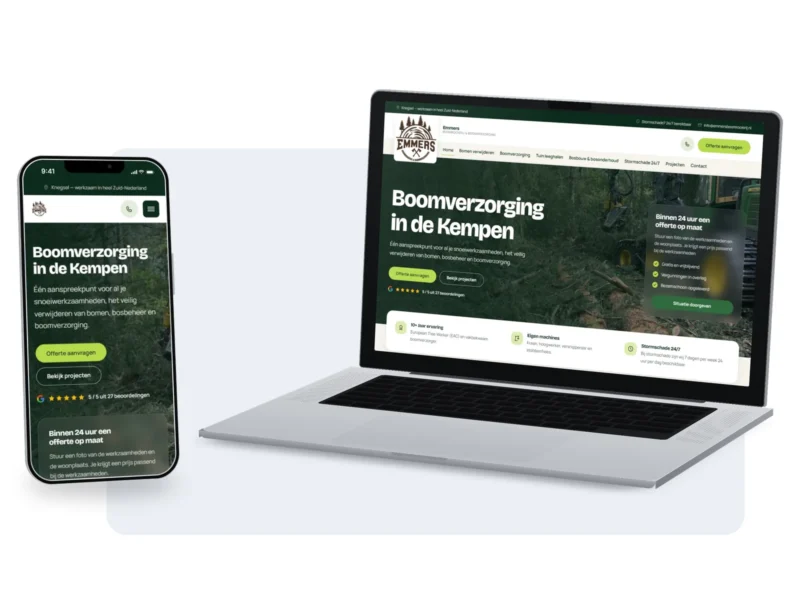
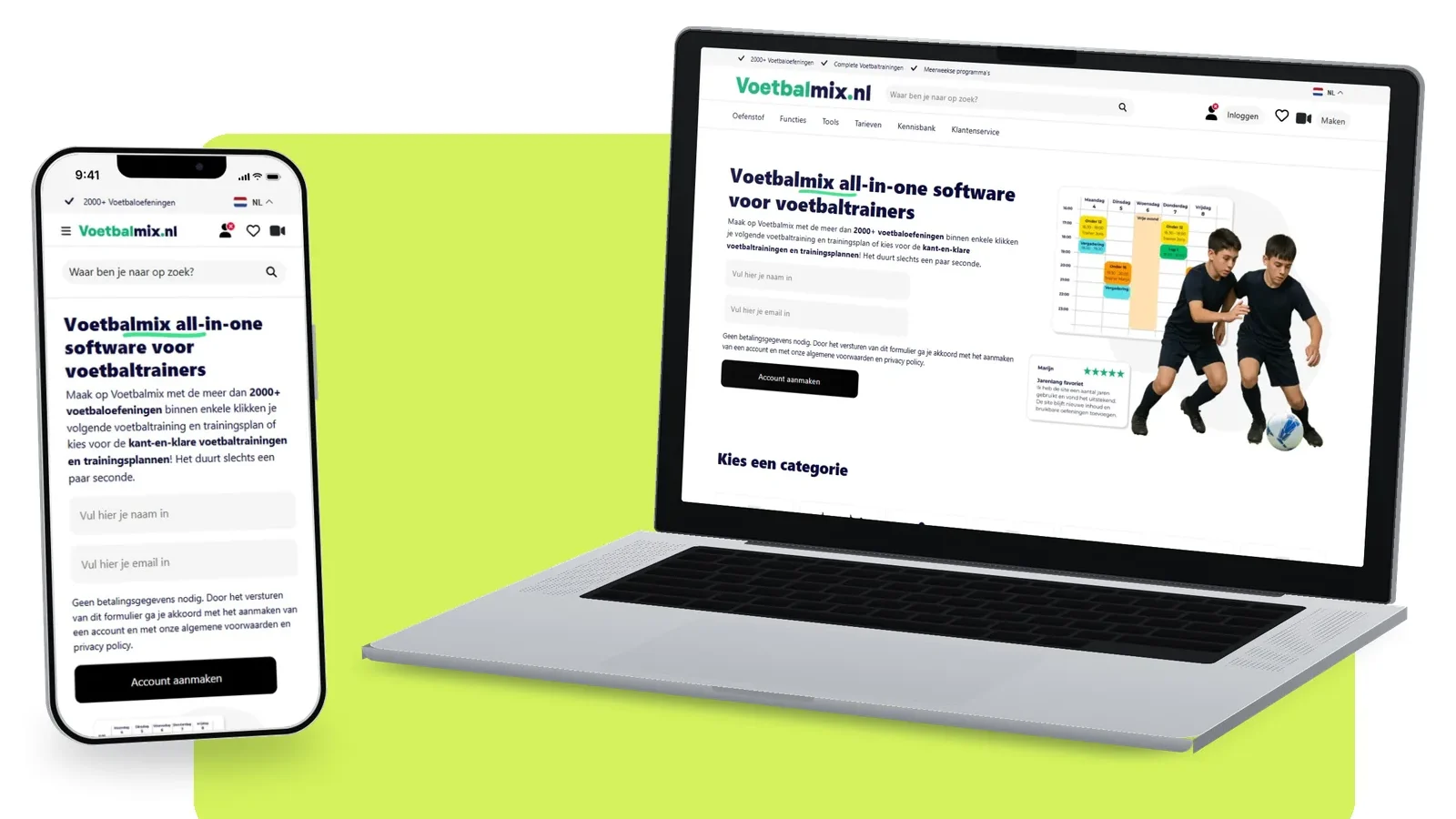
We build every website on our own lightweight WordPress foundation without a page builder. Images automatically load in the right format, fonts are hosted on our own server and every script only loads where it is needed. That is how our websites score green on mobile and desktop. Curious what that looks like? View our projects or read more about website development.